Alek Dundulis, Author at Green APU | Page 4 of 4 Skip to main content

Why do you need apu for your semi truck?

As drivers know, an Auxiliary Power Unit or APU (unit) is a source of electrical power in vehicles, particularly in semi-trucks, for various functions. 

Semi-truck APUs are commonly used to operate accessory equipment including heating and cooling systems. They can also power up halogen lamps for those dimly lit areas, and aerial bucket trucks or service cranes hoist without requiring the main engine to be idle. In turn, this helps you reduce your fuel consumption while powering all the necessary tool drivers, crews, and amenities you need and utilizing their functions for efficient usage. 

Suffice to say, semi-trucks would highly benefit from having APUs. At $6,000 to $10,000 per vehicle, plus the installation, it can be a hefty price to pay, but a worthy investment at that. On the other hand, you may look at APUs for sale for more affordable prices. Green APUs also offer environmentally-friendly service for sustainable use.

Choosing between the two APU types available – whether you need a combustion-power or all-electric APU for your semi would highly depend on your application. 

Combustion-Power APU

Combustion-power or diesel-powered APUs cover unlimited power in operating heating and cooling systems provided the APU has sufficient fuel. This type of APU is ideal for long-haul applications, which is why most drivers prefer it. As with maintenance, you are looking at frequent oil changes, fuel filters, and general preventive measures for sustainable use. 

All-Electric APU

When it comes to all-electrical APUs, these are battery-operated that provide a silent operation. This type of APU (unit) can provide power anywhere between 10 and 12 hours to run your air conditioning unit – longer with a heating system. On its downside, all-electrical APUs for sale offer limited run times. They are only good for moderate usage, and not for lavish truck or RV accommodations like cooking or watching on cable TV. This fact holds for all auxiliary power units for semi-trucks.

With this, all-electric APUs are best for small vehicles and in areas with “no idle” policies where they are preferred, given their zero emissions. To keep it in excellent condition, all you need to apply is simple electrical connection maintenance, plus a battery swap whenever necessary.

Learn More About Green APU

Find a Location Near You

Should I insure my Green Apu Truck?

With fuel costs forever on the rise and idling regulations in place across the country, many in the trucking industry have chosen to install an auxiliary power unit or APU for semi-trucks. An APU for trucks helps to reduce fuel consumption while remaining in compliance with local and national environmental regulations. But just because it is installed and is essentially part of the truck, doesn’t necessarily mean it is insured against damage due to a collision, fire, vandalism, or even theft.

Think about your Green APU in one of two ways to determine whether you should insure the APU unit and how to get the best coverage for it.

Was Your APU Unit Factory Installed?

If your APU for trucks was installed at the factory and cannot be removed, you may consider insuring your APU unit through the truck’s regular damage policy. To do this, you would include the value of the Green APU as part of the value of the truck itself. This would provide you with compensation in the event of a total loss that covers the entire value of the truck, including the APU unit, less the deductible. However, the truck APU is surrendered with the claim and it will have to be replaced when you purchase another truck.

In the case of a covered partial loss, you would pay the deductible and receive an amount that can restore your truck, along with the APU unit, back to the pre-loss condition.

Was Your Auxiliary Power Unit Installed Aftermarket and Can it Be Removed?

If this is your situation, you may consider insurance for your APU unit through an inland marine policy. This type of policy provides coverage against physical damage for any onboard equipment you choose, including the APU for trucks. The kinds of perils that you may choose to have coverage for range from collisions to theft, fire, or vandalism.

In this case, the inland marine policy offers coverage regardless of where the APU unit is at the time of the loss. The benefit of this type of coverage is that if the truck sustains damage rendering it a total loss but the semi-truck APU only sustained minor damage, if any, you can remove the APU unit and install it in a new truck. As well, deductibles for such a policy tend to be much lower than those on a physical damage policy.

So an APU for trucks is a great tool to lower your fuel costs and keep your idling time down, which is why it’s worth considering insurance coverage for it. Just make certain you consider your insurance options and get the right type of policy. That way, you’ll have total peace of mind and can drive confidently knowing your Green APU is covered.

Learn More About Green APU

Find a Location Near You

How to Install the Green APU for Truck?

You’ve made the great decision to go with a Green APU for your truck, now all you need to do is install it. The process is not difficult but does require some planning.

It is recommended that you install your APU for trucks behind the passenger side diesel tank with at least 24-inches of space left along the frame. You can choose a different spot for your APU unit, but make certain that it can be accessed for servicing and that there is enough clearance to open the front cover.

For safety reasons, it’s best to avoid areas like the underside of the truck cabin or sleeper. As well, do not install the APU truck unit near any components that tend to get hot. It may be necessary to make modifications to your fairing, fender, or diesel tank, as that is the prime location on most trucks, but if that is not an option, it’s best to find an alternative location to fit the APU in the semi-truck.

Preparation for Your Green APU Installation

For better accessibility, you can remove the side steps and the skirt on the passenger side. This will give you space to run your coolant lines and battery cables. Removal of the steps and skirt is only a matter of a few bolt and they are easily lifted out of position, giving you the access you need for the water lines and cables under the truck.

The Green APU Installation Kit

Whether you are installing the APU unit yourself or having our professional team do it for you, the installation kit includes everything needed for a smooth process. The installation kit is included for the blower and the motor that makes up your Green APU.

Step 1 of the Green APU Installation

Remove the top and the front covers on the auxiliary power unit to give you access to the mounting brackets in the back so that the unit can be mounted to the truck efficiently.

The brackets require a large and a small bolt, so it sits vertically on the back of the unit over the appropriate holes allowing you to fit the bolts through and tighten them in place with the proper washers and nuts. Note that the large bolt is for the top and the small one is for the bottom of the bracket. These brackets are designed so that the APU unit does not sit flush with the frame. A socket gun and a wrench will tighten the bolts appropriately.

Putting Your APU for Semi-Trucks in Place

Every truck is different so when you determine where your APU unit will sit, you may need to make some adjustments so that it can sit properly on the truck’s frame. Use the mounting blocks and rubber cushions to give you the fit you want, with the large blocks on the top and the small ones on the bottom.

To make things easier, you can use a lift cart to bring the Green APU into position. Another option would be a hoist to bring it over the top of the frame and lower it into place. Consider dropping the APU unit as far back on the frame as possible, leaving you more room to deal with the hoses later.

To tighten the mounting blocks, first remove the top cover of the APU unit, as well as the side cover so that the unit can shift and level itself on the truck frame. For the top blocks, make sure you don’t over-tighten and crush the rubber cushions. To level the unit properly, switch between both blocks so that they are tightened evenly using a socket-gun and a wrench. A minimum of three threads is best. After the top blocks are tightened, the bottom blocks are ready for the same. You will notice that the APU unit cover self-adjusts as the blocks are tightened. The APU is now mounted, so the two APU covers can be locked closed so you do not forget to do so later.

Step 2: Handling the Fuel Line

The installation kit comes equipped with a pickup fuel tube and the fuel line you will need. Some trucks require a second fuel line, but for the most part, one fuel line will be sufficient.

Cut the fuel line in half so that you have a supply line and a return line. Fasten the included clamps to the fuel lines so that when the fuel tank is tapped, they can efficiently be installed.

Determine a good position in the middle of the fuel tank for the fuel tube if your tank does not already have a predetermined access point to add an adapter such as this. If you do have to tap the tank, ensure you pressurize it first so that metal shavings do not end up contaminating the fuel. After the tap hole is drilled, you can install the pick tube into the tank. This may require you to bend the tube to maneuver it under the body of the truck but it can be bent back before sliding it all the way into the tank.  Simply tighten it into position making sure not to strip the threads by overtightening.

It is now time to add the supply line and return line in and ensuring a tight seal using the clamps added on earlier. Attach the other ends of the lines to the APU unit using the clamps on the other end. The lines can be shortened as needed and they can be arranged neatly later on.

Step 3: Battery Installation

There are several ways to attach the APU to the battery and you can determine what would work best in your case, but either way, you will need a positive cable, which has a small hole on the end, and a negative cable. Throw the ends through the truck frame to allow access to the cables from the other side.

Remove the battery cover and hook up the negative to the first battery post. The positive includes a mega-fuse slot for safety. Install the cable directly to the mega-fuse with a lock washer and a nut before hooking it up to the batteries.

Leave enough slack in the cables before zip-tying them into place under the battery cover and then replace the cover ensuring it is completely secure. Consider securing your battery cables so that they don’t rub against each other or any part of the truck.

Two loop clamps are provided to bring the battery cables under the battery to prevent water buildup and corrosion on the battery terminals.

Step 4: Coolant Lines

The coolant lines are installed through the APU so that it can heat the engine block in colder weather, allowing for quick starts. For the installation, there is a supply line and a return line. The supply line will tap into the pressure line and the return line will link into the return line.

Fold the coolant line in half and zip-tie the end of one to identify it as the supply line. Do not cut the line in half but label the ends appropriately. Then, you are ready to determine the best way to run the line without rubbing on anything or interfering with any mechanical features of the truck.

Locate the line that comes out of the cylinder head. This is where the T-shaped splitter will tap in to connect the supply coolant line. A shutoff valve can also be installed here for easy manipulation in case of a ruptured line. The return line is then installed at the top of the engine along with a shutoff valve on the other end.  Both lines can then be zip-tied for stability and safety.

Depending on your truck, you can find the best route for the coolant lines from the engine to the APU for semi-trucks. Ensure that the lines are not near the exhaust.

Step 5: The Alternator Signal Wire

The Green APU can sense when the truck is running through the alternator sensor wire so that it shuts down after 5-minutes.

Some alternators have a plug, while others have post terminals, so before proceeding, determine what kind of alternator connectors your truck has. As well, start your truck and use a volt-meter to find which post is outputting 14-volts.

For a truck with a plug system on the alternator, tap into the middle junction on the factory plug.  This will output 14-volts when the truck is running. Other alternators will have posts that can be tested as the truck is running to determine which one you need to connect to. Once connected, run the wire back along the coolant lines to the Green APU. When the truck is in operation, the APU will shut down after 5-minutes, as noted, and the line running into the cable will initiate a message saying “Main Engine Running.”

Step 6: Connecting the Green APU to the Cab

Before proceeding with any drilling, make sure of what’s on the other side so that you do not cause any unintended damage.

This will require a 4-inch hole saw to tap into the vent, a 4 1/2 hole saw to tap into the main ductwork as a pass-through, and a 1 ¾ hole was to place holes in the floor to drop in drain tubes from the HVAC and to run the harness through for the controller.

Leave a few inches of space along the frame when placing the template on the floor of the cab so that there is sufficient airflow. When drilling a hole through the floor, you can push a small drill bit through to ensure nothing is in the way.

Use the appropriate hole saw to make the necessary holes for the ductwork, centering them where you feel it would work best for you. The blower needs room for the venting system to pass through the walls of the cabin. Use the largest hole saw noted for said ductwork, and then a smaller hole saw for the harness just below that first hole.

The controller will be fastened in the appropriate position within the cab using the smallest of the hole saws noted. Then, when all the holes are in place, you can feed the venting and cabling through.

Feed the harness through the hole made up until the Y in the cabling. On that Y, one side will be fed up through the hole into the controller, and the other will connect to the blower. Here there are four connections:

  1.       The blower itself
  2.       The wire valve
  3.       The alternator signal wire
  4.       The monitor inside the HVAC

After all the connections are made, you can neatly secure the excess cabling, tubing, and wiring, while also mounting the controller with four simple screws to hold it in place.

With this installation, your truck will be ready to use your new APU unit.


If you still have doubts, see our installation movie PLAY

Learn More About Green APU

Find a Location Near You

What are the benefits of using Green Apu?

Trying to keep a truck on the road over the long term and even from haul to haul is a never-ending battle between man and machine. The cost of operating a truck can put a real dent in your pocket and your bottom line. That’s why an auxiliary power unit for semi-trucks can be so valuable.

Not only can a truck APU offer excellent savings on every trip, but it can also save your engine, making it last that much longer before you need to go out and get a new truck. Here is what you can expect from putting an APU unit in your truck going forward.

Stay Within the Law

With the environmental impact as one of the primary concerns of many these days, there are relatively new laws that we must all consider when on the road. That includes anti-idling laws. As many of a truck’s systems rely on power from the engine to operate, idling has always been necessary, but with a Green APU installed, that necessity is a thing of the past.

A semi-truck APU runs in place of an idling engine to ensure that all the systems needed are operating without breaking any engine idling laws.

Save Fuel

Since the truck APU is doing all the work that the engine used to, that means less fuel is being used to maintain all the systems needed, including heating and cooling. That results in fewer stops at the pump and money saved on fuel, as industry standards show that fuel spent on an idling engine can cost anywhere from 0.6 gallons to 1.1 gallons per hour. That can add up very quickly over time.

Automatic Comfort

There is no mental switch needed when a driver pulls into a rest stop after a long drive. An auxiliary power unit automatically jumps into action as soon as the engine shuts down, offering all the power needed to maintain a comfortable cabin. It’s quiet and there is no concern over fuel loss.

Reduced Engine Maintenance

Spend more time driving and less time with the truck in the service shop. Typically, idle time on a truck can run up to 2600 hours per year. That is a lot of wasted fuel and wear and tear on the engine. But with a Green APU, that idling time is dramatically reduced, leading to longer engine life and fewer trips to the shop, leaving more time for driving.

If It’s Good for Aviation It’s Good for a Truck

Auxiliary power units are fast becoming the standard for more than just the trucking industry. You can find APU units in aircraft, as they operate many onboard systems, while also allowing the engines to conserve fuel before takeoff. Plus, APU units are a valuable commodity on space crafts. So if other major industries are making use of auxiliary power units and seeing the benefits first-hand, any truck can see those same benefits from a truck APU.


Learn More About Green APU

Find a Location Near You

What You Need To Know About Green APU Maintenance and Care?

apu-for-trucks

Truck APUs, under normal circumstances it should run silently in the background, helping make the transportation easier and safer for the passengers. When it comes to the maintenance of your APU units, it can be easy once you already know the basics. Maintaining your green APU is the same as the way you would maintain an engine. Here are a couple of ways that you can help ensure that your semi-truck APU will extend its lifetime.

One of the important things that you need to keep in mind when taking care of your APU units is when you notice a minor issue, make sure to replace it right away. Small issues can turn into something bigger, which will cost you even more money to repair. You should also check your oil level before changing it, and getting your oil change will also help keep your green APU in its best shape. Replacing your air and oil filter will also make sure that your APU units will also last you an extended period of time.

 Maintain your Semi Truck APU unit

Another way to maintain your truck APU is to check the connection to your AC system as well as its efficiency. It is also great to make a habit of checking your water hose filters to see if any leaks may take place. You should also ensure that you wash and change the filter on your HVAC in the tractor cab.

Making sure that you conduct regular monitoring and inspections will ensure that you will stay on top of your green APU units. This way, it will allow you to reduce a significant amount of costs and maintenance that you have to go through in making sure that your APU units are in its top shape.

When it comes to your truck APU, you want to start off right with a high-quality brand to give you the most for your investment. At our company, we make sure only to provide the best APU for sale. We will provide you with the highest quality of APU units to make sure that your travels are safe and comfy. Pick up the phone today and give our company today so that you can get yours!

Learn More About Green APU

Find a Location Near You

How much can you save with Green APU?

There are many questions as to whether an APU unit can save you money throughout your long journey. Here, we will talk about the advantages and savings that you can get when you have a Green APU unit for your trucks.

Now, the entire purpose of having an auxiliary power unit for your truck is to maintain its operating systems without having to run them through the fuel tank all the time. When doing this, it can save you a lot of money because it does not consume the fuel that you consume in the course of a year in your truck’s tank.

How much can an APU unit save you?

A typical truck may consume a gallon of diesel fuel per hour during its idle time. Having said this, at an average year, the cost of fuel that you would need to spend is $6720, with a price of $2.80 per diesel gallon. When you have APU units, that cost can be cut down to 90% by burning through about 0.01 gallon fuel per hour. This brings down your to $672 spent on fuel per year, and that’s all thanks to your auxiliary power units.

It will also save you a lot of money when it comes to providing maintenance for your trucks because a Green APU unit is capable of displaying any issues that your truck may have. It has a battery monitoring and coolant temperature monitoring so that it can determine the needs that your truck may have.

Our auxiliary power unit for semi trucks are designed to last for a long period of time, which is why we have a 2-year or 2000 hour warranty. This will make sure that you have long term savings on energy and money since the system will continue to run in the background. Aside from that, the price of our Green APU units is 30% less than our competition.

Don’t find yourself spending too much on your trucks because the cost of fuel is not going down at any time. Green APU does not only provide comfort to your drivers but will also save you a lot of money. It is an investment that is worth having, especially when it will save you a lot of money in the long run.

Learn More About Green APU

Find a Location Near You

How is Green APU improving lives of drivers?

Long drives can be pretty hard to those truck drivers, especially if it’s during the winter season. Green APUs are the best weapon that a driver can have. One of the reasons why is it can save them a lot of fuel during their long journeys. Not only that, APU units can keep drivers warm during the winter and cool during the summer without needing to put their engine on idle when they take their rests.

Now, an APU is used to provide an external power source without pulling any from the engine rig. A good example is if you are not able to turn on your engine because your out for hours, you’re APU unit will kick in and will have your air conditioning as well as heating working. It will provide airflow throughout the truck’s HVAC system.

In any event of emergencies, APU units may come in handy. A good example is if a driver experience engine failure, they don’t need to worry since APU has the capability to supply power. The drivers will be comfortable until they are able to fix the problem within their trucks.

Another great thing about these units is the drivers do not need to worry about their travels. They will have peace of mind whenever they travel for a long time. If a driver finds themselves stuck in the middle of nowhere, these units are able to get them through the problems that they have during their drives.

Drivers are away from their homes for an extended period, and a comfortable sleeper is needed during their journey. Choosing the right truck APU is essential, especially knowing that it will help you get through the tough times during your drives.

Green APU is providing the best unit in the area. Our company designed our units to last for an extended period of time. Our units are not only great for drivers, but it will also save your truck energy and money. Contact us so that you can get your APU units today. We will assure you that you won’t have any regrets!

Learn More About Green APU

Find a Location Near You

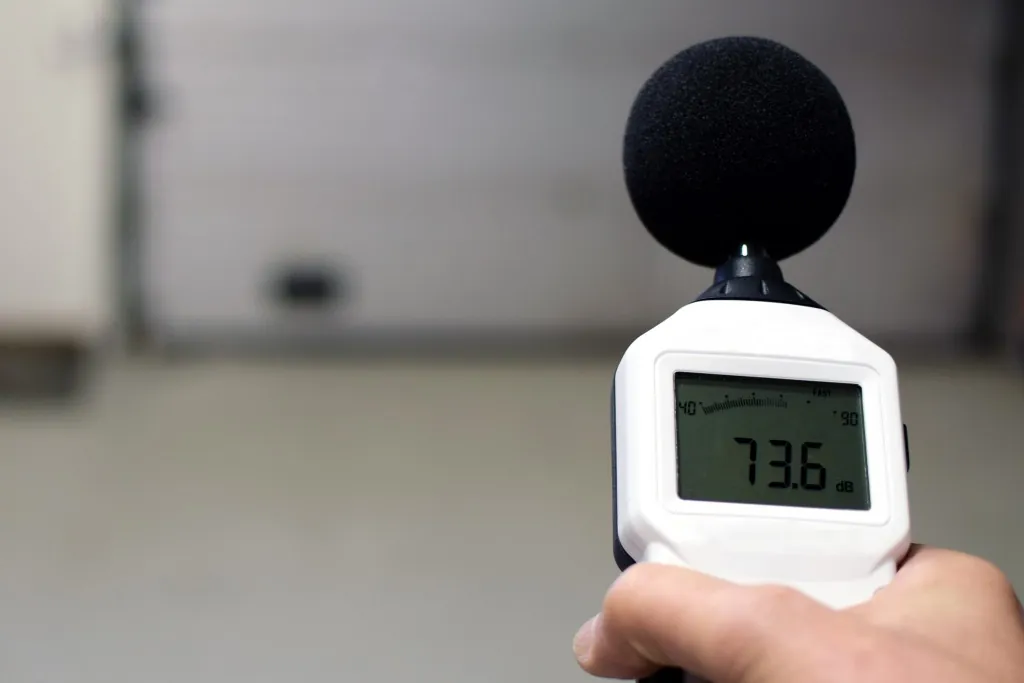
How Loud is Our Green APU?

noise measurement

As you may be aware, there are many benefits to having an Auxiliary Power Unit installed in your truck, not the least of which is the savings you achieve on lower fuel consumption. An APU can have a dramatic positive affect on any trucking business’s bottom line, especially when installed in the entire fleet of trucks.

But can a truck APU be a nuisance to the driver? How loud can and APU generator get while in operation?  Let’s examine how loud a Green APU can get and see if it can be a bother to you or your truck drivers.

The Number of Decibels Heard in a Truck

What is the sound of silence? Well, in a truck, when everything is still and quiet, take a decibel reading and you may find that even in silence there is some sound.

A quiet moment in a truck provides 38 decibels (dBA) of sound. We can use that as a baseline to determine just how loud your APU systems can get.

Decibels for Regular Speech Patterns

Now that we know how quiet silence really is at 38 dBA, here is what the decibel meter would say when having a regular conversation in your truck. You may see a reading someone around 75 dBA when listening to someone speak in the truck’s cabin.

The Sound of a Green APU

 With the Green APU unit running and no other noise taking place within the cabin of the truck, your decibel meter would read approximately 61 dBA. That’s slightly more than complete silence but not quite as high as conversational speech.

As you can see, an auxiliary power unit for trucks does not make much noise at all. In fact, you could continue with a conversation uninterrupted by the sound of the APU generator quite easily. So a Green APU is not loud at all, as it sounds more like a whisper in the background without causing a disturbance for the driver.


Learn More About Green APU

Find a Location Near You

Advantages of a Green APU

green apu

In the trucking industry, expenses can get out of control quickly, especially when it comes to rising fuel costs. But there is a solution that is affordable, saves time, and will help keep money from flying into the fuel tank. The solution is an auxiliary power unit for trucks.

An APU unit can change the way any truck operates in one seamless and automated device. Here are some great advantages to installing a Green APU into a truck’s systems.

Save Thousands of Dollars

The whole purpose of a Green APU unit is to maintain a truck’s operating systems without having to run them through the fuel tank all the time. By doing so, that limits the amount of fuel used and over the course of a year, the savings really add up.

In fact, depending on the systems used in the truck and operating time, a truck APU can save upward of $5000 per year or more. It’s an investment well worth having in any truck.

Operational Truck Assistance

As the best APU on the market today, Green APU units offer great versatility as an alternative to fuel running a truck’s systems. From offering cold starts and engine preheating to cab heating and cooling to bunk heat, the Green APU can do it all and more.

Plus, the approximate fuel consumption while using the Green APU sits at 0.3 gallons per hour, allowing the truck to drive further on a single tank of fuel. And if it’s ever needed, the Green APU has an easily accessible jump start feature.

Easier Truck Maintenance

With onboard built-in diagnostic systems, the Green APU is capable of displaying any issues. As well, it includes battery monitoring and coolant temperature monitoring to better determine when the tuck needs servicing.

Long Lifespan

Because Green auxiliary power units for trucks were designed to last, they come with a 2-year or 2000 hour warranty. That ensures long term savings on energy and money as the system continues to operate in the background.

Technical support is also a wonderful feature to have if it’s ever needed. That’s why the Green APU includes lifetime assistance on a 24 hour a day, 7 days a week basis.

Take your truck further on a tank of fuel with the best APU on the market today. A Green APU should be in every truck on the road simply as a way to conserve energy but it’s the perfect tool to keep the money savings flowing directly to the bottom line.

Learn More About Green APU

Find a Location Near You

WHAT IS AN APU FOR A TRUCK?

truck unit

[vc_row css=”.vc_custom_1556108323105{padding-bottom: 40px !important;}”][vc_column width=”1/2″][vc_single_image image=”3145″ img_size=”full”][/vc_column][vc_column width=”1/2″][vc_column_text]

As fuel demands continue to increase globally, so does its price. Therefore, alternative fuel sources, in addition to major breakthroughs in technology, are gaining widespread attention. These past years, electric vehicles and hybrid engines have made a steady rise in consumer markets. Innovations like these give us hope that not all technology that benefit man destroy the earth.

An example is the Auxiliary Power Units or APU. These devices are attached to vehicles, such as heavy trucks, mainly as a secondary energy source, to power its heating/cooling system, among others.

Nevertheless, in some areas, for large vehicles or trucks used for cargo transport or aircraft, fuel remains essential. Recently, however, the passing of Anti-Idling bills making it illegal for trucks to remain idle for some period, have forced truckers to look for other sources of energy to power the above mentioned. In contrast, APUs power up a vehicle’s secondary accessories and functions, in addition to other benefits, while the engine is turned off.

[/vc_column_text][/vc_column][/vc_row][vc_row][vc_column][vc_column_text]

What You Need To Know When You’ve Decided To Buy An Auxiliary Power Unit (APU)

Once you’ve decided to purchase an APU, the next step should be to determine what works best for you in terms of:

[/vc_column_text][vc_row_inner css=”.vc_custom_1556109008966{padding-top: 50px !important;}”][vc_column_inner width=”1/3″][vc_column_text]

Energy Source

In general, the two types of APUs based on their power source is the Diesel/Combustion-powered and Electric-powered. A diesel powered APU doesn’t run on diesel fuel alone, though. Some models run on alternative fuels such as natural gas, whereas others are combined for future innovation. On the other hand, the electric powered APU is powered by cell batteries which vary with the size of the vehicle and the period they last and the required charging.

[/vc_column_text][/vc_column_inner][vc_column_inner width=”1/3″][vc_column_text]

Capacity

An important consideration to be made when picking which APU best suits you is to ask yourself how much work you require it to perform, and the period of time it’ll be operating. If the job you perform is one where traveling some distance is required, then a diesel powered APU is the right choice.

Combustion-powered APUs last for as long as you need, provided fuel remains. By contrast, Electric-powered APUs last only until the batteries run out, and charging is required.

[/vc_column_text][/vc_column_inner][vc_column_inner width=”1/3″][vc_column_text]

Budget

Diesel-powered APUs require purchasing fuel, increasing one’s budget. However, you get this back and more from its workload capacity. On top of that, combustion APUs require maintenance annually.

Electric APUs require no fuel to work and a minimal maintenance. It outshines its counterpart in this category, saving a decent amount in comparison.

[/vc_column_text][/vc_column_inner][/vc_row_inner][/vc_column][/vc_row][vc_row css=”.vc_custom_1556109469045{padding-top: 40px !important;}”][vc_column][vc_column_text]

The APU You Choose May Help Save The Planet

One of the biggest advantages APUs provide is not directed towards its owner but another: The Planet.

[/vc_column_text][vc_row_inner css=”.vc_custom_1556109008966{padding-top: 50px !important;}”][vc_column_inner][vc_column_text]

Apart from the significant amount of fuel emissions prevented from further polluting the atmosphere, APU technology is advancing rapidly. What requires fuel today may tomorrow need a few hours of sunlight. While this has yet to come, it is nonetheless important to note that there exist, at present, products that showcase the perfect balance between innovation and eco-awareness.

Green APU has the distinction of being the Diesel APU manufacturer whose product maintains the same high level of quality craftsmanship and performance, and is specially designed to emit the least amount of carbon emissions (on fuel use).

[/vc_column_text][/vc_column_inner][/vc_row_inner][/vc_column][/vc_row]

Learn More About Green APU

Find a Location Near You